
How Documentary Creators Use AI Prompt Tools to Improve Research and Production
Documentary creators often spend countless hours gathering information before production even begins.
Sources must be reviewed.
Facts must be verified.
Timelines must be organized.
Narratives must be structured.
For many creators, research and planning consume far more time than recording itself.
As documentary projects become larger, organizing information efficiently becomes increasingly important.
This is one reason AI prompt tools are becoming popular among documentary creators.
The goal is not to replace research.
Instead, prompt tools help creators interact with AI systems more effectively, making research, planning, and production workflows easier to manage.
Why Documentary Research Requires Structure
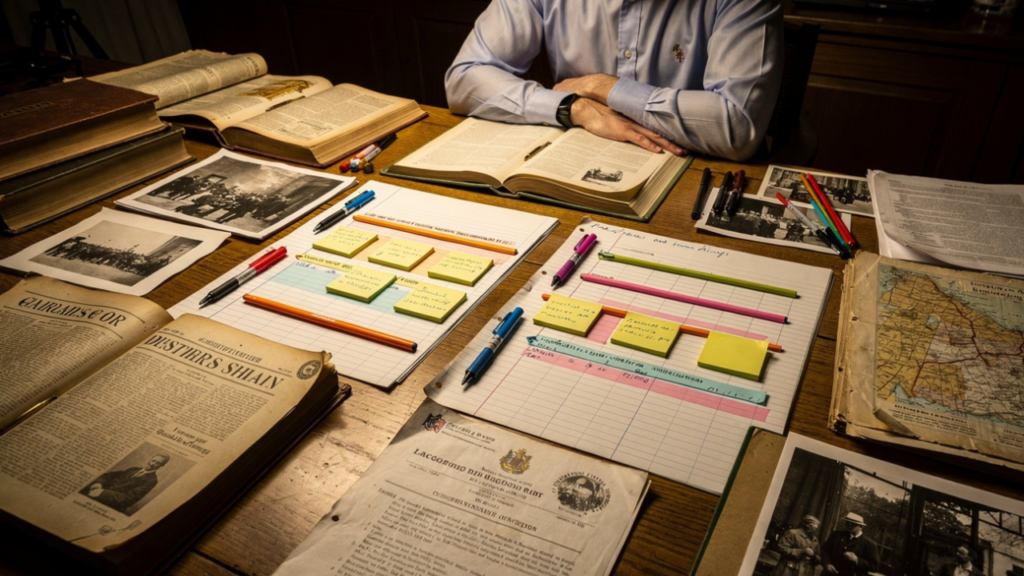
Documentary content often depends on large amounts of information.
Creators may work with:
- Historical records
- Government documents
- Academic research
- Interviews
- News archives
- Industry reports
- Books
- Public databases
Without a clear system, important details can easily become buried inside research materials.
Many documentary creators discover that asking better questions often produces better results.
This is where prompt systems become useful.
Related: Many documentary creators combine prompt systems with structured content planning workflows. Learn how creators organize research and production schedules using AI content planning tools.
What Are AI Prompt Tools?
AI prompt tools help users create, organize, improve, and reuse prompts when working with AI platforms.
Instead of writing every prompt from scratch, creators can use structured templates designed for specific tasks.
Many documentary creators use prompt systems for:
- Research organization
- Fact extraction
- Timeline creation
- Source analysis
- Documentary outlines
- Script development
- Production planning
The creator remains responsible for the final work.
The prompt system simply improves efficiency.
How Documentary Creators Use AI Prompt Tools
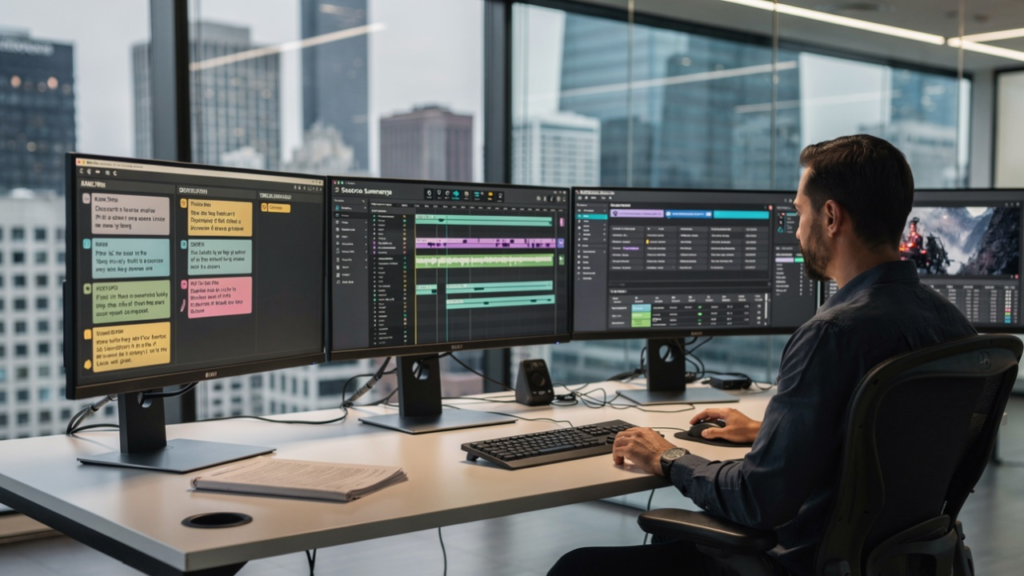
Many creators build prompt libraries for recurring tasks.
Examples include:
Research Prompts
Used to summarize reports and organize information.
Timeline Prompts
Used to structure historical events chronologically.
Script Development Prompts
Used to organize narration sections.
Source Verification Prompts
Used to identify missing information and research gaps.
Production Planning Prompts
Used to create workflows for future projects.
As channels grow, reusable prompts often become valuable productivity assets.
Related: Organized research often becomes the foundation for stronger video scripts. See how creators use AI script-writing tools to streamline content production.
ChatGPT Prompt Libraries
ChatGPT remains one of the most popular prompt systems among documentary creators.
Many use it to:
- Brainstorm documentary topics
- Organize research notes
- Build production outlines
- Create documentary frameworks
- Structure documentary series
For creators publishing consistently, reusable prompts can significantly reduce planning time.
PromptPerfect
PromptPerfect is designed specifically to improve prompt quality.
Many documentary creators use it to:
- Refine research prompts
- Improve AI responses
- Expand complex requests
- Create structured research workflows
For projects involving extensive research, this can simplify information management considerably.
AIPRM
AIPRM provides large collections of prompt templates.
Many documentary creators use it for:
- Research assistance
- Source organization
- Script planning
- Topic exploration
- Documentary workflows
Instead of starting from scratch, creators can adapt existing prompt frameworks to their own projects.
FlowGPT
FlowGPT allows creators to explore prompts shared by other users.
Many documentary creators use it to discover:
- Research workflows
- Planning systems
- Writing frameworks
- Content structures
For beginners, this can provide useful examples of effective prompt design.
Why Systems Matter More Than Individual Prompts
Many new creators spend time searching for the perfect prompt.
Experienced creators often focus on building repeatable systems.
A reusable prompt library can help organize:
- Research workflows
- Documentary planning
- Script development
- Production schedules
- Content calendars
The result is often greater consistency rather than greater speed.
Related: Effective prompt systems are often part of broader productivity workflows used by successful solo creators.
The Biggest Mistake Creators Make With Prompt Tools
Some creators assume a strong prompt eliminates the need for human judgment.
This can create problems.
Documentary content still requires:
- Fact verification
- Context evaluation
- Source review
- Critical thinking
Prompt tools can improve workflows.
They cannot replace editorial responsibility.
The most successful creators use AI as a support tool rather than a substitute for expertise.
Human Expertise Still Creates Great Documentaries
Audiences do not watch documentaries because prompts were effective.
They watch because creators provide:
- Strong storytelling
- Reliable information
- Clear explanations
- Interesting perspectives
- Trustworthy research
AI tools can support the process.
Human expertise remains the foundation of documentary content.
The Future of Documentary Production Workflows
As AI systems continue evolving, documentary creators will likely build increasingly sophisticated production workflows.
Prompt tools are becoming part of that process.
They help organize information.
They simplify repetitive tasks.
They improve workflow consistency.
Related: Documentary creators frequently combine research databases with AI-powered video production workflows.
Yet the creators who continue growing are usually the ones who combine:
- Strong research
- Structured workflows
- Reliable sources
- Human expertise
- Effective storytelling
AI prompt tools can improve production efficiency.
The creator remains the reason the documentary succeeds.
ForgeCreatorAI Team writes about AI tools, content creation, digital workflows, and productivity systems for modern creators. Our goal is to simplify AI technology and help creators work smarter through practical tools and automation.