
Documentary YouTube creators often spend far more time researching than recording.
Viewers usually see the final video.
A polished narration.
Historical footage.
Interesting facts.
Clear storytelling.
What they rarely see is the enormous amount of information collected before production even begins.
Many documentary creators spend days or weeks gathering sources, reviewing articles, analyzing reports, organizing references, and verifying facts before writing a single line of narration.
As projects become larger, managing information often becomes one of the most difficult parts of the entire workflow.
This is one reason AI research tools are becoming increasingly valuable for documentary YouTube creators.
The goal is rarely to replace research.
Instead, AI helps creators organize information, manage sources, and build structured production workflows.
Why Documentary Content Requires Extensive Research
Unlike many other content formats, documentaries depend heavily on information accuracy.
Creators may need to review:
- Historical records
- Academic papers
- Government reports
- News archives
- Interviews
- Books
- Industry publications
- Statistical data
- Public databases
- Legal documents
A single documentary can involve dozens or even hundreds of individual sources.
Without a clear organizational system, important information can easily become lost.
Many creators discover that managing research becomes just as important as creating the documentary itself.
Related: Many documentary creators combine note-taking systems with structured content planning workflows. Learn how creators organize research and production schedules using AI content planning tools.
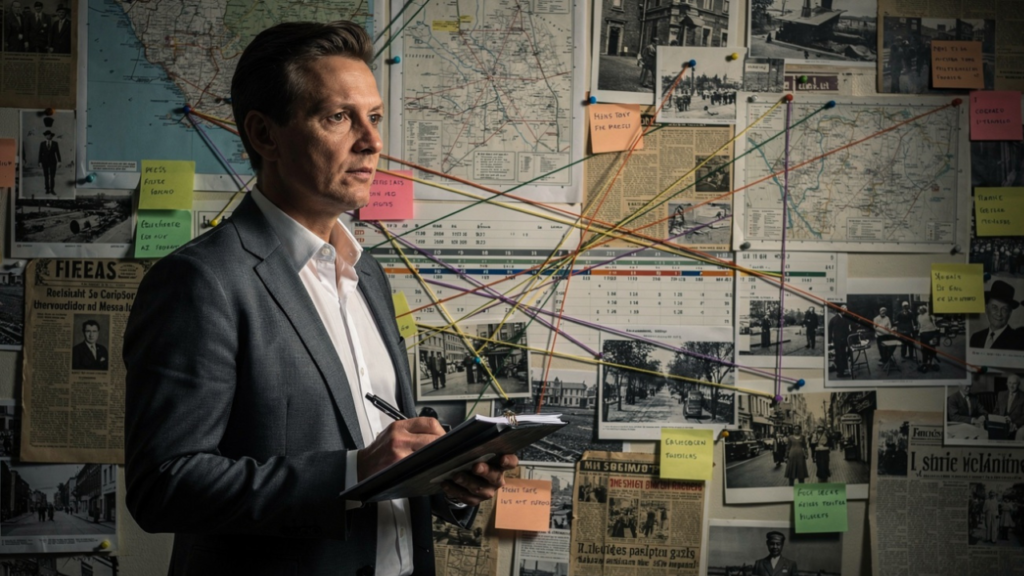
The Hidden Work Behind Documentary Production
Most viewers only see the finished project.
They rarely see the preparation process.
A typical documentary creator may spend time:
- Collecting sources
- Verifying information
- Reviewing documents
- Creating timelines
- Organizing references
- Writing outlines
- Planning visual sequences
- Building scripts
- Recording narration
- Editing footage
- Updating projects
As channels grow, managing this information becomes increasingly complex.
Many successful creators rely on structured systems to keep research organized throughout production.
Related: Organized research often becomes the foundation for stronger video scripts. See how creators use AI script-writing tools to streamline content production.
Why Many Documentary Creators Use AI
When people hear about AI tools, they often imagine automatic video creation.
Most documentary creators use AI very differently.
For many, AI functions primarily as a research assistant.
Common uses include:
- Organizing notes
- Summarizing documents
- Categorizing sources
- Structuring research
- Creating timelines
- Identifying content gaps
- Managing reference libraries
- Building production outlines
The creator still performs fact-checking and analysis.
AI simply helps manage large amounts of information more efficiently.
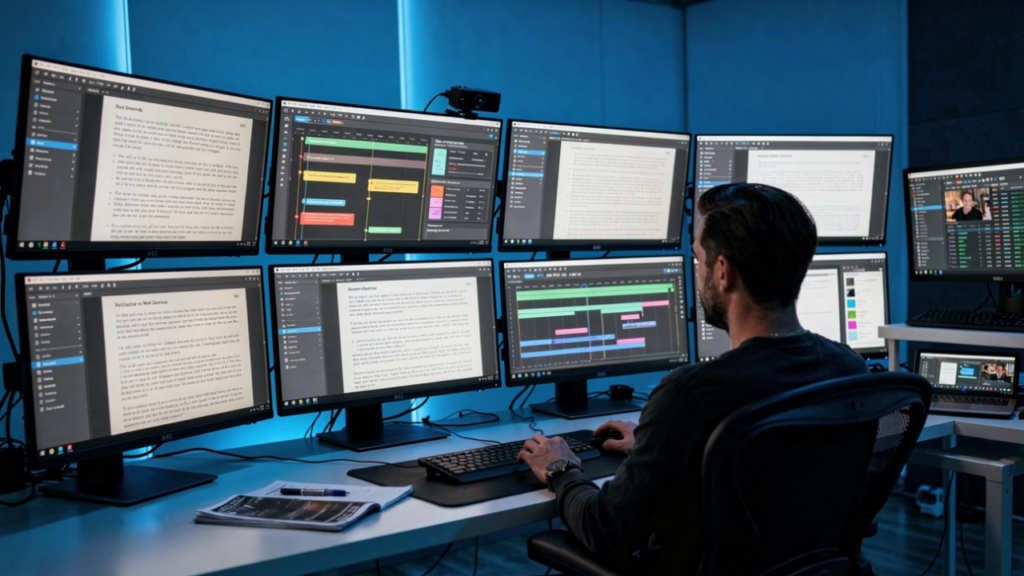
NotebookLM
NotebookLM has become increasingly popular among documentary creators.
Many use it to organize large collections of research materials.
Common uses include:
- Reviewing source documents
- Summarizing reports
- Comparing multiple sources
- Building research archives
- Structuring documentary topics
For projects involving extensive research, this can significantly simplify information management.
Learn more about NotebookLM on Google’s official website.
Claude
Claude is particularly useful when handling large documents.
Many documentary creators use it to:
- Review research files
- Summarize lengthy reports
- Extract important details
- Organize complex topics
- Create structured notes
This becomes especially valuable when working with hundreds of pages of source material.
Notion AI
Notion AI often serves as the central hub of a documentary workflow.
Creators frequently use it to organize:
- Research databases
- Documentary projects
- Source libraries
- Production timelines
- Script development
- Publishing schedules
As documentary channels expand, organization often becomes one of the most important productivity advantages.
ChatGPT
Many documentary creators use ChatGPT during planning stages.
Common uses include:
- Generating outline structures
- Organizing research notes
- Building episode frameworks
- Creating production checklists
- Planning documentary series
Rather than replacing research, the tool helps transform information into an organized workflow.
Related: Many documentary creators also use AI voice tools to transform research and scripts into narrated video content.
Why Organization Matters More Than Research Speed
Many new creators assume successful documentary channels simply research faster.
In reality, they often organize better.
A creator with a structured research system can usually produce more content than someone constantly searching through scattered notes and unfinished projects.
Many experienced documentary creators maintain organized collections of:
- Sources
- Interview notes
- Timelines
- Visual references
- Research databases
- Future project ideas
AI tools can help maintain these systems as projects become larger.
Related: Effective note-taking systems are often part of broader productivity workflows used by successful solo creators.
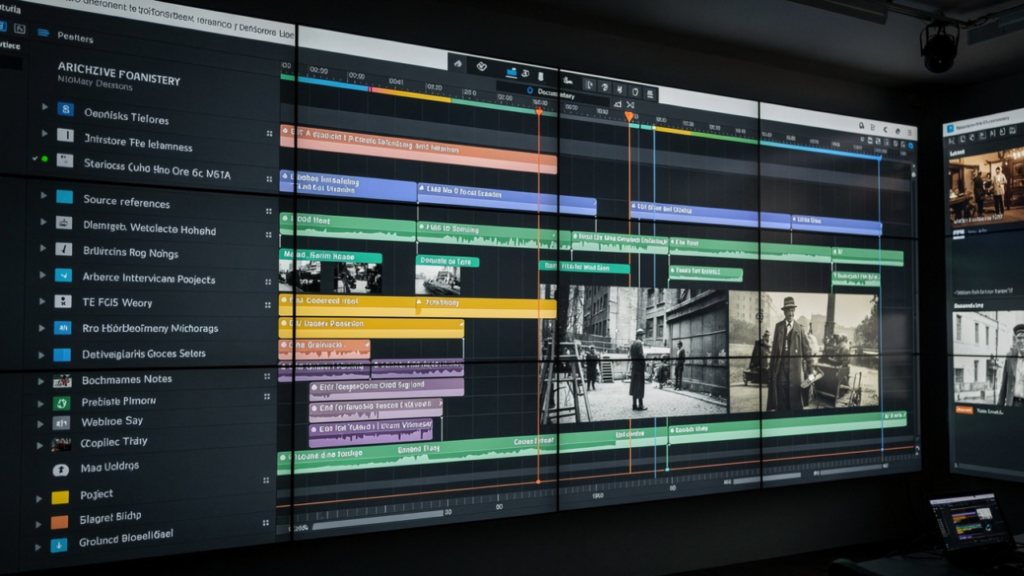
The Biggest Mistake Documentary Creators Make With AI
Some creators assume AI summaries eliminate the need for verification.
This can create problems.
Documentary content depends heavily on accuracy.
Sources must still be reviewed.
Facts must still be verified.
Context must still be understood.
The most successful creators use AI as an organizational tool rather than a replacement for research itself.
Human Judgment Still Matters Most
Audiences watch documentaries because they want information presented clearly and responsibly.
They value:
- Accurate research
- Careful analysis
- Reliable sources
- Clear explanations
- Strong storytelling
- Trustworthy content
AI can help organize information.
It cannot replace critical thinking.
The creator remains responsible for the final interpretation of the material.
The Future of Documentary Research
Research workflows continue evolving rapidly.
Documentary creators now have access to tools that can organize information more efficiently than ever before.
AI is helping simplify many of the administrative tasks involved in documentary production.
Related: Documentary creators frequently combine research databases with AI-powered video production workflows.
Yet the creators who continue building successful channels are usually the ones who combine:
- Strong research practices
- Reliable sources
- Structured workflows
- Consistent publishing
- Human expertise
AI can help manage information.
It can simplify organization.
It can improve workflow efficiency.
But audiences rarely return because research was organized efficiently.
They return because the creator transforms information into a compelling story worth watching.
For documentary YouTube creators, that remains one of the most valuable skills any channel can develop.

ForgeCreatorAI Team writes about AI tools, content creation, digital workflows, and productivity systems for modern creators. Our goal is to simplify AI technology and help creators work smarter through practical tools and automation.