
Educational creators often begin with a simple goal.
They want to share knowledge.
A teacher creates lessons.
A tutor records explanations.
A subject expert publishes helpful content.
From the outside, educational content can appear straightforward.
A video gets uploaded.
A blog post gets published.
A lesson becomes available online.
What audiences rarely see is everything happening behind the scenes.
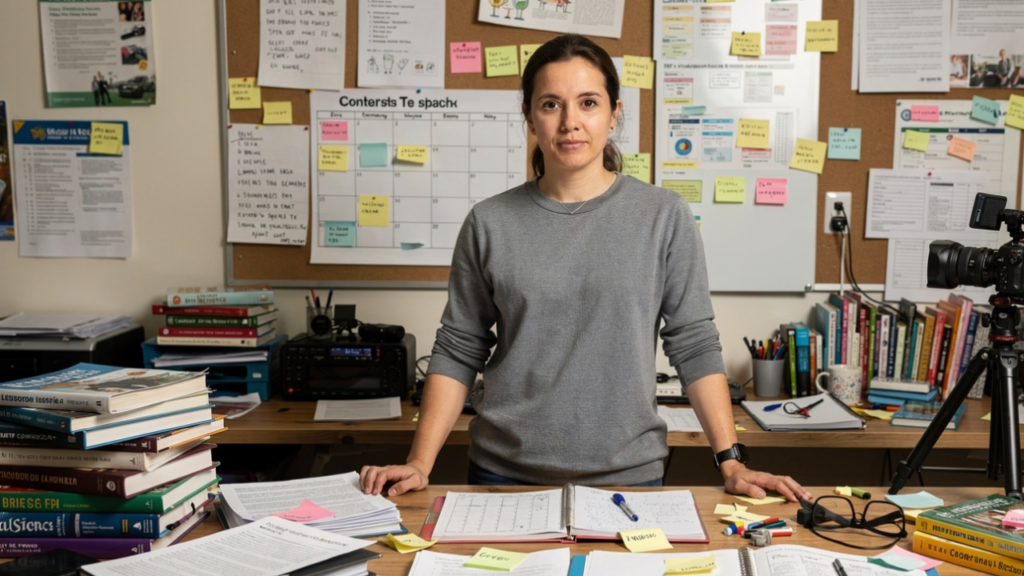
Educational creators frequently manage research, planning, writing, recording, editing, publishing, and audience engagement entirely on their own.
For many creators, teaching is not the most difficult part of the process.
Organization is.
As content libraries grow, managing information becomes increasingly important.
This is one reason successful educational creators often focus on building systems rather than simply working harder.
The goal is not to create more work.
The goal is to create a workflow that allows content production to remain consistent over time.
Why Educational Creators Often Work Alone
Many educational projects begin as individual efforts.
A teacher may start a YouTube channel.
A homeschool parent may create learning resources.
A professional may begin sharing expertise through blog posts or online lessons.
At the beginning, working alone can feel manageable.
A creator has only a few lessons.
A handful of videos.
A small collection of articles.
Over time, however, the amount of content grows.
New ideas appear.
Existing lessons require updates.
Audience questions create additional opportunities for future content.
What once felt simple gradually becomes more complex.
Many creators eventually realize they are operating a small educational publishing system even if they never intended to build one.
Related: Many educational creators use AI tools to simplify publishing workflows and stay organized as their content libraries grow.
The Hidden Work Behind Educational Content
Most viewers see the finished lesson.
They rarely see the preparation process.
A typical educational creator may spend time:
Researching topics
Verifying information
Creating lesson outlines
Writing scripts
Designing slides
Recording videos
Editing content
Creating thumbnails
Publishing materials
Planning future lessons
Managing resources
Updating older content
The lesson itself may only represent a small portion of the total workload.
As content accumulates, creators often discover that organization becomes just as important as production.
Without a system, valuable ideas can easily become buried inside notebooks, spreadsheets, browser tabs, and unfinished drafts.
Why Content Organization Becomes Essential
Educational content often remains useful for months or even years.
A creator may be managing:
Lesson plans
Course materials
Blog articles
Video scripts
Research notes
Visual resources
Audience feedback
Future content ideas
When all of this information remains scattered across multiple locations, productivity begins to suffer.
Creators spend time searching for information they already created.
Lessons become harder to update.
Publishing schedules become inconsistent.
Many creators discover that their biggest challenge is no longer creating content.
The challenge becomes finding content.
An organized system helps reduce this friction.
Instead of constantly searching for materials, creators can focus on improving and expanding their educational resources.
Common Systems Educational Creators Use
There is no single system that works for everyone.
Different creators prefer different approaches.
Some rely on digital workspaces.
Others prefer simple planning tools.
Common systems often include:
Content calendars
Editorial schedules
Research databases
Lesson libraries
Project management boards
Cloud storage systems
Knowledge repositories
The specific platform matters less than the consistency of the process.
A simple system used regularly often performs better than a complicated system that is ignored.
Successful creators typically focus on creating workflows that are easy to maintain rather than impressive to look at.

How AI Helps Educational Creators Stay Organized
Many educational creators now use AI tools to support organization rather than content generation.
Common uses include:
Organizing notes
Categorizing lesson ideas
Structuring content calendars
Summarizing research
Creating outlines
Managing content libraries
Planning future topics
Tracking content workflows
The creator still provides expertise and educational value.
Related: Educational YouTube creators are also using AI avatar technology to reduce production bottlenecks while focusing on teaching.
The AI simply helps manage information more efficiently.
For creators handling large amounts of educational material, this support can reduce administrative workload considerably.
Instead of spending time organizing documents manually, creators can focus more attention on teaching and content development.
The Biggest Mistake Solo Creators Make
One common mistake appears repeatedly across educational projects.
Creators try to keep everything in their heads.
Future lessons.
Content ideas.
Publishing dates.
Research notes.
Audience requests.
Course updates.
Eventually, the mental workload becomes difficult to manage.
Important ideas get forgotten.
Projects become delayed.
Publishing schedules become inconsistent.
This is often not a productivity problem.
It is an organizational problem.
Systems exist to reduce cognitive load.
The goal is not to remember everything.
Related: Productivity systems become even more important as creators manage multiple projects, publishing schedules, and growing audiences.
The goal is to create a reliable place where information can be stored, organized, and retrieved when needed.
Systems Create Consistency
Many people associate consistency with motivation.
In reality, consistency often comes from structure.
A creator with a reliable workflow can continue producing content even during busy periods.
Lessons remain organized.
Future topics remain visible.
Publishing schedules remain manageable.
The result is often less stress and greater stability.
Instead of constantly deciding what to create next, the creator can simply follow an established process.
This creates more space for creativity because less energy is spent on administrative decisions.

Educational Content Is Becoming More Complex
Modern educational creators often operate across multiple platforms.
A single lesson may appear as:
A YouTube video
A blog article
A downloadable resource
A newsletter topic
A social media post
An online course module
Managing this ecosystem requires more than expertise.
It requires organization.
As educational content continues expanding across formats, effective systems become increasingly valuable.
Related: Homeschool creators face similar organizational challenges when managing educational blogs, lesson resources, and content planning.
Creators who organize information efficiently often find it easier to maintain quality while continuing to grow.
The most successful educational creators are not necessarily the ones working the longest hours.
They are often the ones who build systems that allow knowledge, resources, and content ideas to remain organized over time.
Those systems make consistency possible.
And consistency remains one of the most valuable advantages any educational creator can develop.
ForgeCreatorAI Team writes about AI tools, content creation, digital workflows, and productivity systems for modern creators. Our goal is to simplify AI technology and help creators work smarter through practical tools and automation.