
AI avatars for educational YouTube channels are helping creators produce educational content faster while maintaining consistency and audience engagement.
From the viewer’s perspective, the process seems straightforward.
A teacher explains a concept.
A tutor walks through a lesson.
A creator shares useful knowledge.
The video appears on screen with clear narration, organized visuals, and smooth pacing.
What viewers rarely see is everything that happens before the video is published.
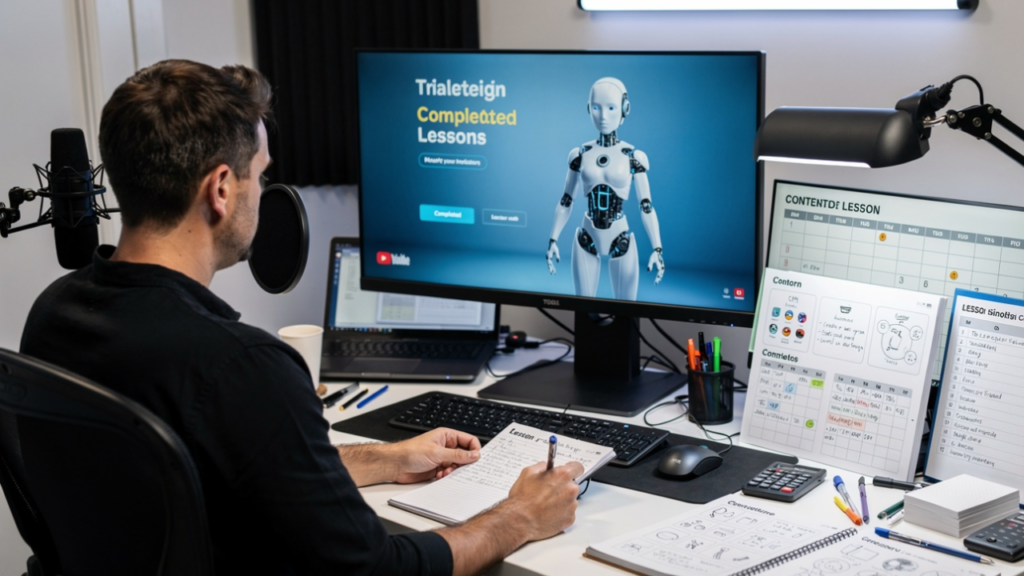
Educational creators often spend hours researching topics, preparing lesson plans, writing scripts, recording explanations, editing mistakes, creating visuals, designing thumbnails, and organizing future content.
For many creators, recording the lesson itself is only a small portion of the total workload.
This is one reason AI avatar tools are becoming increasingly popular among educational YouTube creators.
The goal is rarely to replace teaching.
Instead, these tools help creators simplify parts of the production process so they can focus more on delivering valuable educational content.
Why Best AI Avatar Tools for Educational YouTube Channels Are Growing
Educational videos carry a unique responsibility.
Unlike entertainment content, viewers often rely on educational creators to help them understand unfamiliar topics.
That means creators frequently spend significant time preparing before recording even begins.
Depending on the niche, a single video may require:
- Researching information
- Verifying facts
- Organizing lesson structures
- Writing scripts
- Creating examples
- Designing visual aids
- Planning demonstrations
- Reviewing content for accuracy
A creator teaching history, science, finance, language learning, technology, or productivity may spend several hours preparing material for a video that lasts only ten or fifteen minutes.
As channels grow, managing this workload becomes increasingly challenging.
Many educational creators also rely on AI-assisted writing workflows to organize research, outlines, and lesson structures more efficiently, a trend similar to what we explored in our article about how YouTube script writers are using AI to stay organized.
Many creators eventually discover that producing educational content consistently requires much more organization than they initially expected.
Building a reliable publishing system often becomes just as important as creating lessons themselves, which is why many creators are now developing structured workflows similar to the strategies discussed in our guide about AI content planning for creators.

The Recording Process Can Become a Major Bottleneck
Many educational creators enjoy teaching.
What they often struggle with is the production process surrounding the lesson.
Recording videos introduces challenges such as:
- Camera setup
- Lighting adjustments
- Audio checks
- Background preparation
- Multiple retakes
- Presentation anxiety
- Scheduling recording sessions
A creator may have excellent educational material ready to share but still postpone publishing because recording feels time-consuming.
This becomes even more difficult for creators who:
- Work full-time jobs
- Manage businesses
- Teach professionally
- Raise families
- Produce content alone
Over time, recording can become one of the biggest obstacles to maintaining a consistent publishing schedule.
This is where AI avatar technology is beginning to attract attention.
Why AI Avatars Are Becoming More Common
Many people assume AI avatars exist simply to automate content creation.
In reality, educational creators often use them for a much more practical purpose.
They help reduce production friction.
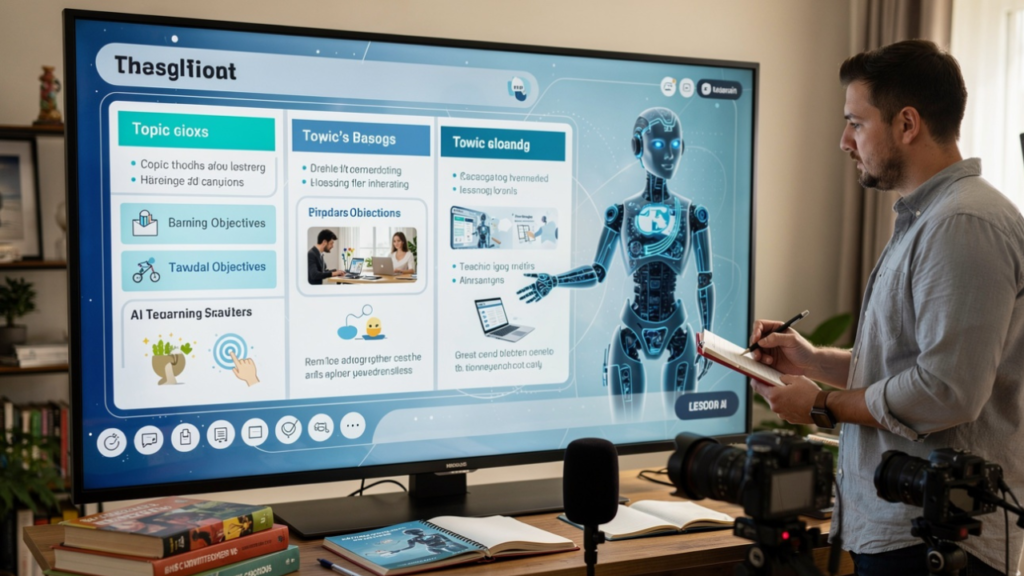
Instead of recording every lesson on camera, creators can provide a script and use an AI avatar to present the material.
This approach can help creators:
- Produce videos faster
- Maintain consistent visual presentation
- Avoid repeated recording sessions
- Create multilingual content
- Update lessons more easily
- Scale educational content production
For creators who already spend substantial time researching and writing, reducing recording requirements can create significant workflow improvements.
The educational value still comes from the creator’s expertise.
The avatar simply becomes a delivery method.
What AI Avatars Actually Do
AI avatars function as digital presenters.
Most platforms allow creators to:
- Upload scripts
- Choose avatar presenters
- Select voice options
- Customize branding
- Generate video presentations
Some tools even support:
- Multiple languages
- Voice cloning
- Custom avatars
- Educational templates
- Screen presentations
- Interactive training content
The technology continues improving rapidly, making avatar-based educational videos increasingly common across YouTube and other learning platforms.
However, the effectiveness of a video still depends heavily on the quality of the lesson itself.
Best AI Avatar Tools for Educational YouTube Creators
Synthesia
Synthesia remains one of the most widely recognized AI avatar platforms.
Many educational creators use it to create:
- Online lessons
- Training videos
- Educational presentations
- Course content
- Explainer videos
Its professional presentation style makes it particularly useful for structured educational content.
HeyGen
HeyGen has become popular because of its flexibility and realistic avatars.
Educational creators often use it for:
- Tutorials
- Language-learning content
- Product demonstrations
- Educational explainers
Many users appreciate the platform’s ability to create videos quickly without requiring complex editing skills.
Elai.io
Elai focuses heavily on educational and business communication.
Creators can convert written material into avatar-based video presentations, making it useful for lesson delivery and instructional content.
Colossyan
Colossyan offers tools designed for learning and training environments.
Educational creators frequently use it to produce:
- Educational modules
- Knowledge-sharing videos
- Instructional content
- Training lessons
Its workflow is particularly appealing to creators producing large volumes of structured educational material.
AI Avatars Do Not Replace Teaching Skills
One misconception surrounding AI avatars is the belief that they automatically create valuable educational content.
They do not.
Students do not learn because a digital presenter appears on screen.
They learn because information is explained clearly.
They learn because examples make sense.
They learn because a creator understands the subject and communicates it effectively.
An avatar can deliver information.
It cannot replace expertise.
A strong educational creator still needs to:
- Research thoroughly
- Verify information
- Structure lessons logically
- Create engaging explanations
- Understand audience needs
The educational value remains human.
The avatar simply helps deliver it.
Why Some Educational Creators Prefer Not Appearing on Camera
Not every educator wants to become an on-screen personality.
Some creators feel uncomfortable in front of cameras.
Others prefer focusing entirely on teaching rather than personal branding.
AI avatars offer an alternative.
Creators can build educational channels without worrying about:
- Camera confidence
- Appearance
- Studio setup
- Recording environments
This lowers the barrier to entry for many knowledgeable individuals who want to share expertise online but have little interest in becoming traditional influencers.
Common Mistakes Creators Make With AI Avatars
Although AI avatars can save time, some creators use them incorrectly.
Common mistakes include:
Relying Entirely on Automation
Videos that are fully automated often feel generic.
Educational content benefits from human insight and context.
Ignoring Audience Engagement
Viewers still want content that feels helpful and relevant.
Simply reading facts rarely creates strong engagement.
Overloading Scripts
Educational creators sometimes attempt to include too much information in a single lesson.
Clear communication usually performs better than excessive detail.
Forgetting Storytelling
Even educational content benefits from narrative structure.
Examples, curiosity, and real-world applications help maintain viewer attention.
Educational Content Still Depends on Human Connection
One reason successful educational channels continue growing is because audiences connect with the creator behind the lesson.
Viewers appreciate:
- Clear explanations
- Unique perspectives
- Practical examples
- Teaching experience
- Authentic communication
Whether the creator appears on camera or uses an AI avatar, those human qualities remain essential.
Technology can improve efficiency.
It cannot fully replace trust.
And trust remains one of the most valuable assets any educational creator can build.
The Future of Educational Video Creation
Educational content is becoming increasingly competitive.
More creators now have access to professional editing tools, AI writing assistants, automated workflows, and avatar technology than ever before.
As these tools become more accessible, production quality alone will become less important as a competitive advantage.
The channels that stand out long-term will likely be the ones that combine:
- Strong expertise
- Clear communication
- Consistent publishing
- Effective organization
- Meaningful audience connection
AI avatars will almost certainly continue improving.
Avatar technology is only one part of the larger AI video ecosystem. Many creators are also experimenting with AI-powered video generation tools to streamline educational content production even further.
They will become more realistic.
More customizable.
More efficient.
But viewers will still return for the same reason they always have.
They want to learn from people who understand the subject and can explain it clearly.
For educational YouTube creators, the real opportunity is not allowing AI avatars to replace teaching.
It is using them to remove production obstacles so more time can be spent creating lessons that genuinely help people learn.
Because technology may deliver the message.
But great educators are still the reason audiences keep coming back for the next lesson.
Many of the best AI avatar tools for educational YouTube channels now help creators simplify production workflows while keeping educational content engaging and accessible.
ForgeCreatorAI Team writes about AI tools, content creation, digital workflows, and productivity systems for modern creators. Our goal is to simplify AI technology and help creators work smarter through practical tools and automation.