
AI research tools for writers are changing how content creators gather information, organize ideas, and build high-quality articles.
For many writers, research takes longer than writing.
Hours can disappear while searching for sources, verifying facts, organizing notes, and trying to understand complex topics.
This challenge becomes even larger for solo creators who manage every stage of content production themselves.
Fortunately, modern AI research tools can significantly reduce the time spent gathering information while helping creators build stronger and more valuable content.
The goal is not to replace research.
The goal is to make research faster, more organized, and more efficient.
Why Research Slows Down Many Writers
Most content creators understand the importance of research.
However, the process often includes:
- Searching multiple websites
- Comparing sources
- Organizing notes
- Verifying information
- Identifying content gaps
- Building article structures
Without a clear system, research can quickly become overwhelming.
Many creators spend more time collecting information than actually creating content.
This is especially common when covering educational, technical, financial, or research-heavy topics.
Related: Many creators first improve their brainstorming process by learning how to generate better content ideas using AI.
How AI Changes the Research Process
AI tools help creators process information more efficiently.
Many writers use AI to:
- Explore new topics
- Summarize information
- Identify key concepts
- Generate research questions
- Organize notes
- Build content outlines
Instead of replacing critical thinking, AI often helps writers focus their research efforts more effectively.
The result is usually faster preparation and better content organization.

ChatGPT for Topic Exploration
ChatGPT is often used as a research assistant during the early stages of content creation.
Many writers use it to:
- Understand unfamiliar topics
- Generate research questions
- Explore content angles
- Create initial outlines
- Identify related subtopics
This can significantly reduce the time required to understand a new subject.
However, creators should always verify important facts independently.
Related: Many documentary creators use AI research systems to organize large amounts of information before production begins.
Claude for Deep Analysis
Claude is frequently used when creators need more detailed analysis.
Many writers use Claude to:
- Review long documents
- Analyze complex topics
- Compare information
- Extract key insights
- Build content structures
This makes Claude particularly useful for educational and research-focused content.
Instead of reading dozens of pages manually, creators can quickly identify the most important information.
Perplexity for Source Discovery
Perplexity has become one of the most popular AI research tools for writers.
Unlike traditional AI chat systems, Perplexity focuses heavily on finding and presenting sources.
Many creators use it to:
- Discover authoritative websites
- Find recent information
- Explore industry trends
- Verify claims
- Identify supporting resources
This helps reduce the time required to locate reliable information.
Perplexity is especially useful when researching fast-changing topics.
Notion AI for Research Organization
Research becomes far more valuable when it remains organized.
Many writers use Notion AI to manage:
- Research databases
- Source collections
- Content notes
- Topic clusters
- Editorial calendars
Organized research systems make it easier to reuse information across multiple articles.
Finding Better Content Opportunities
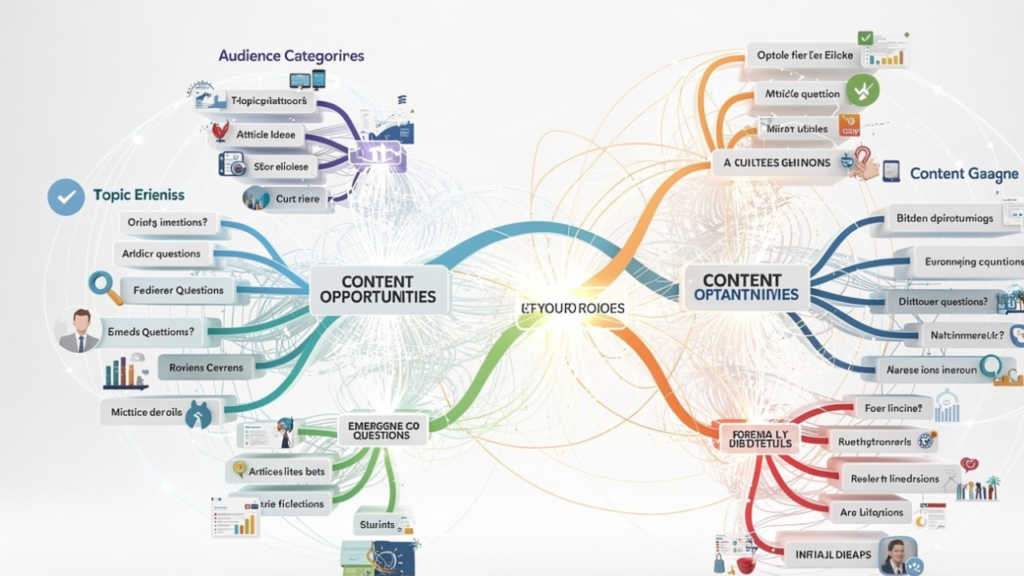
One major advantage of AI-assisted research is discovering opportunities that competitors may overlook.
Many creators use AI to identify:
- Frequently asked questions
- Audience pain points
- Emerging trends
- Underserved topics
- Content gaps
These opportunities often become the foundation for highly valuable content.
The goal is not simply finding information.
The goal is finding useful information that audiences actively seek.
Common Research Mistakes Writers Make
AI can improve research efficiency.
It cannot eliminate poor research habits.
Some common mistakes include:
- Trusting AI-generated information blindly
- Using a single source
- Ignoring fact verification
- Failing to check publication dates
- Prioritizing speed over accuracy
Strong content still depends on careful verification.
The most successful creators treat AI as an assistant rather than an authority.
Why Human Verification Still Matters
AI tools can summarize information.
They can identify patterns.
They can organize research.
However, creators remain responsible for accuracy.
Writers should always:
- Verify important claims
- Check original sources
- Review statistics
- Confirm current information
- Apply professional judgment
Readers trust content creators.
Maintaining that trust requires responsible research practices.
The Future of AI-Assisted Research
Research tools continue improving rapidly.
In the future, creators will likely spend less time searching and more time creating.
Information discovery will become faster.
Organization will become easier.
Content planning will become more efficient.
Yet the creators who produce the highest-quality content will continue combining:
- Strong research habits
- Reliable sources
- Human expertise
- Critical thinking
- AI-assisted workflows
AI can help find information.
Creators transform that information into valuable content.
For writers, that partnership may become one of the most important advantages in modern content creation.

ForgeCreatorAI Team writes about AI tools, content creation, digital workflows, and productivity systems for modern creators. Our goal is to simplify AI technology and help creators work smarter through practical tools and automation.