
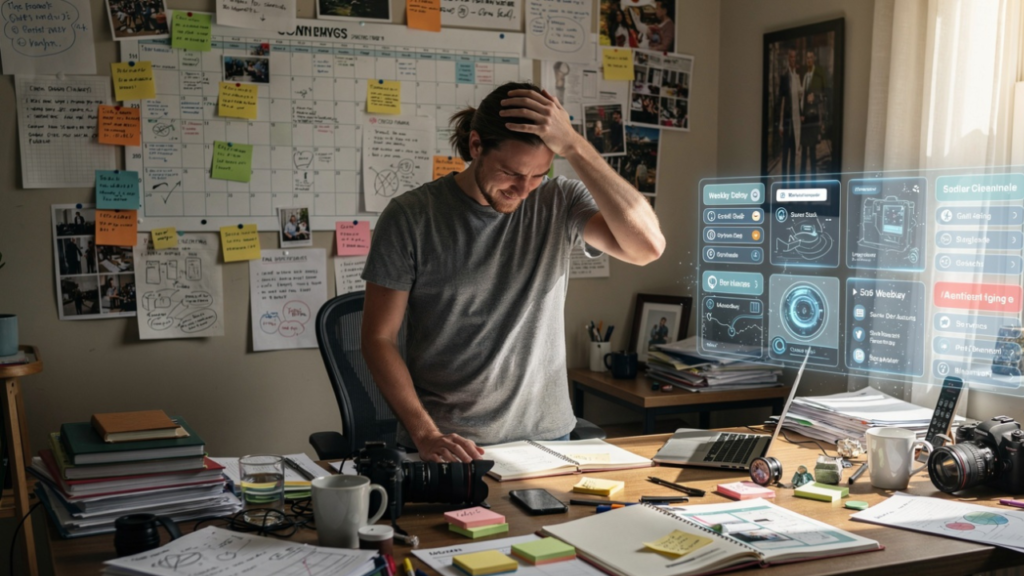
Every Sunday evening, Maya uses weekly content planning with AI to organize her ideas. Inside her document, there are dozens of unfinished content ideas.
Some came from comments.
Others came from videos she watched during the week.
A few were inspired by conversations with followers.
The problem is not creativity.
The problem is deciding what deserves attention first.
Like many small creators, Maya works alone.
She manages content planning, writing, editing, publishing, audience engagement, and performance tracking without a team.
For creators in this situation, producing content consistently can feel less like a creative process and more like managing a never-ending to-do list.
This is one reason AI planning tools are becoming increasingly common among independent creators.
Not because AI creates successful content automatically.
But because it helps creators organize ideas, build workflows, and transform scattered thoughts into structured publishing plans.
Why Weekly Planning Has Become So Important
A decade ago, many creators could publish content whenever inspiration appeared.
Today’s environment is different.
Audiences consume content across multiple platforms every day.
A creator may simultaneously manage:
- TikTok videos
- Instagram posts
- YouTube Shorts
- Email newsletters
- Blog articles
- Community updates
Without a plan, content production often becomes reactive.
Creators spend their days deciding what to publish instead of actually creating.
This constant decision-making creates mental fatigue.
Over time, productivity suffers.
Weekly planning helps solve this problem by providing direction before the work begins.
Instead of asking, “What should I post today?” creators already know what comes next.
The Challenge Most Small Creators Underestimate
Many beginners assume content creation revolves around producing content.
Experienced creators know something different.
Content planning is often more difficult than content production itself.
Creating a single video may take one hour.
Deciding which video deserves that hour can take even longer.
Small creators constantly face choices:
Should they follow trends?
Should they revisit older topics?
Should they create educational content?
Should they focus on audience questions?
Should they experiment with new formats?
Without a system, these decisions repeat every day.
Eventually, creators become trapped in a cycle of constant uncertainty.
This is where AI-assisted planning begins to provide value.
AI Is Helping Creators Turn Ideas Into Systems
Most successful creators do not use AI to replace creativity.
Instead, they use it to organize creativity.
Many creators now rely on AI tools to:
- Group related content ideas
- Build weekly content calendars
- Identify recurring audience questions
- Generate content themes
- Create publishing schedules
- Organize research notes
- Develop content outlines
Similar planning methods are increasingly being adopted by video creators who use AI systems to organize research, scripts, and publishing schedules more efficiently.
The result is not necessarily more content.
The result is often better structure.
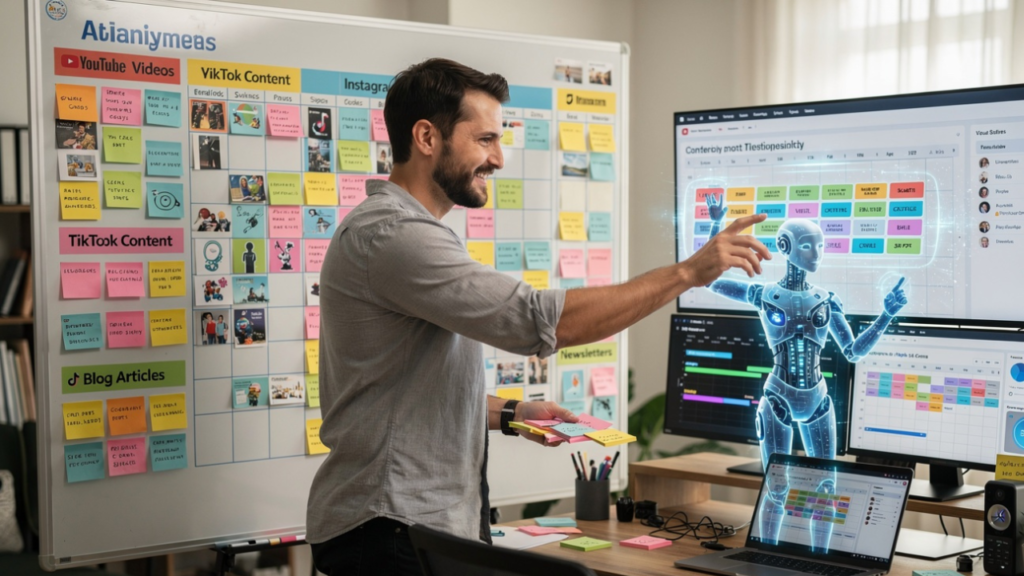
Rather than storing ideas across notebooks, spreadsheets, screenshots, and phone notes, creators can build centralized planning systems that make content easier to manage.
Information Is Everywhere
One challenge unique to modern content creation is information overload.
Ideas arrive constantly.
A creator may discover inspiration through:
- Audience comments
- Industry news
- Competitor content
- Podcasts
- Books
- Social media discussions
- Everyday experiences
The same challenge appears across social media marketing, where creators often need systems to organize content ideas, captions, and publishing schedules consistently.
Capturing ideas is relatively easy.
Organizing them is much harder.
After a few weeks, many creators accumulate dozens or even hundreds of unfinished ideas.
Without a clear process, valuable concepts often disappear before they become published content.
AI planning tools help creators categorize, sort, and prioritize information before it becomes overwhelming.
Similar workflow systems are also helping independent online business owners manage product research, content planning, and operational tasks more efficiently.
Instead of asking, “What should I create?” they can ask, “Which of these organized ideas should I create first?”
That small shift often reduces stress significantly.
Weekly Planning Creates More Creative Freedom
Some people assume planning limits creativity.
In reality, many creators experience the opposite.
When planning is handled in advance, creators gain more freedom during production.
They spend less time worrying about what comes next.
More time can be spent improving storytelling, refining visuals, and connecting with audiences.
A creator who knows the next five pieces of content often works with greater confidence than someone starting from zero every morning.
The structure supports creativity rather than restricting it.
This is one reason planning systems have become common among creators who publish consistently for years.
Human Judgment Still Drives Great Content
AI can help organize ideas.
It can summarize information.
It can suggest content structures.
But it cannot fully understand what matters most to a creator’s audience.
Human judgment remains essential.
Creators still decide:
- Which stories to tell
- Which experiences to share
- Which audience questions deserve attention
- Which topics align with their goals
The most effective planning systems combine technological efficiency with human decision-making.
AI handles organization.
The creator provides direction.
That partnership often produces stronger results than either approach alone.
Consistency Often Starts With Better Planning
Many creators believe consistency is primarily about discipline.
Discipline matters.
But systems matter too.
Publishing regularly becomes easier when decisions are made in advance.
Instead of starting each day with uncertainty, creators can follow a structured roadmap.
This reduces stress, improves productivity, and creates a more sustainable workflow.
Over time, consistency compounds.
Audiences become familiar with publishing patterns.
Trust develops.
Engagement grows.
The process feels less chaotic and more intentional.
The Future of Content Planning
The creator economy continues expanding rapidly.
Every year, more individuals build businesses, communities, and personal brands through content.
As competition increases, organization may become just as valuable as creativity.
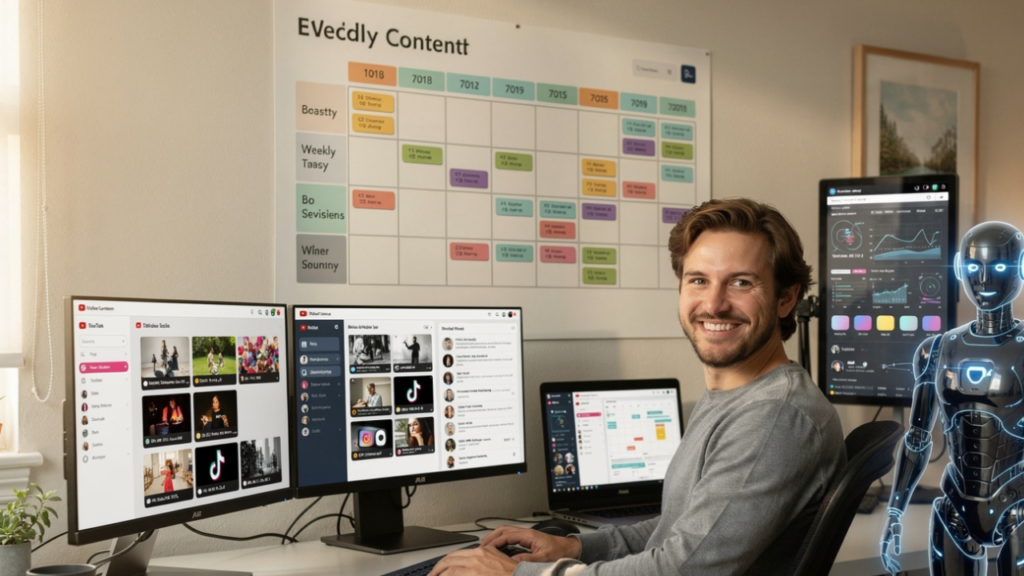
AI planning tools will likely continue evolving as assistants that help creators manage workflows, organize ideas, and maintain publishing schedules.
Yet the creators who stand out long term will probably share the same qualities they always have.
They understand their audience.
They communicate clearly.
They publish consistently.
And they remain authentic.
Technology can help creators plan more effectively.
It can simplify repetitive tasks.
It can reduce organizational stress.
But audiences still connect with people, not software.
For small creators, the opportunity is not using AI to replace creative thinking.
It is using AI to create enough structure that creative thinking can happen more often.
Because successful content rarely begins when the camera turns on.
It usually begins much earlier, during the quiet planning sessions where scattered ideas slowly become a meaningful story worth sharing.

ForgeCreatorAI Team writes about AI tools, content creation, digital workflows, and productivity systems for modern creators. Our goal is to simplify AI technology and help creators work smarter through practical tools and automation.