
For many homeschooling families, blogging begins almost accidentally.
Learn how homeschool parents use AI to write learning blogs faster, organize educational content, improve productivity, and stay consistent with blogging.
A parent wants to document a child’s learning progress. Someone shares a reading activity that worked surprisingly well. Another family posts photos from a science project and realizes other homeschool parents are searching for the same ideas online.
Over time, these small posts often grow into full educational blogs.
What makes homeschool blogs so valuable is that they usually come from real daily experiences rather than formal academic systems. Readers are often looking for practical solutions, honest reflections, and realistic routines from families navigating similar challenges.
But maintaining a homeschool blog consistently is not easy.
Most homeschooling parents are already balancing lesson planning, household responsibilities, educational activities, appointments, meal preparation, and unpredictable daily schedules. Writing long articles often becomes something saved for late evenings, after children are asleep and the house finally becomes quiet for a little while.
By then, mental energy is usually running low.
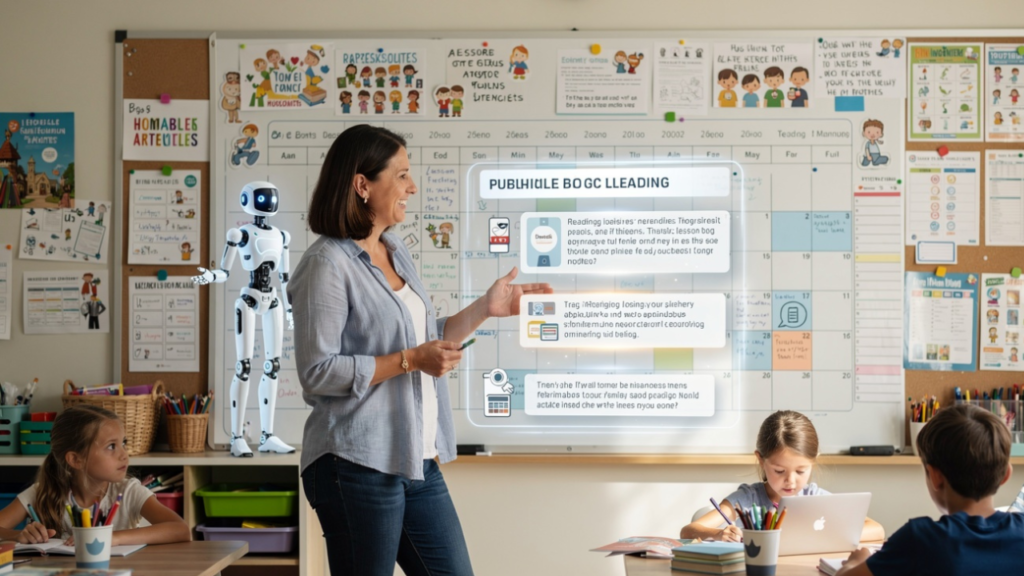
This is one reason AI writing tools are quietly becoming part of many homeschool creators’ routines. Not because parents want artificial intelligence to replace their voice, but because they want help organizing ideas and reducing some of the repetitive work involved in content creation.

Homeschool Blogging Has Become More Demanding
Several years ago, many homeschool blogs were simple online journals.
Today, educational content creators often manage much more than written articles alone.
Some homeschooling parents now combine:
- Blog posts
- Printable learning resources
- Email newsletters
- Pinterest content
- Educational communities
- YouTube channels
- Social media updates
Even smaller blogs can quickly become difficult to manage consistently without some type of workflow system.
A parent might spend the entire morning teaching math lessons, helping with reading exercises, and organizing activities, only to remember later that a blog post still needs editing or an email newsletter was supposed to be sent earlier that week.
This constant switching between teaching and content creation can become exhausting over time.
AI tools are helping some parents simplify part of this process.
Where AI Actually Helps the Most
One misconception about AI writing tools is the idea that creators simply generate full articles instantly and publish them without involvement.
In reality, most homeschool bloggers use AI in much smaller and more practical ways.
For example, a parent may already have handwritten notes about a child’s progress in reading comprehension but struggle to turn those thoughts into a structured article. AI can help organize the flow of ideas more clearly.
Others use AI for simpler tasks like:
- Creating article titles
- Organizing outlines
- Improving grammar
- Rewriting awkward sentences
- Summarizing lesson observations
- Drafting social media captions
Many of these same writing workflows are also popular among independent bloggers in other niches. Similar AI writing strategies can be seen in content creation projects where creators use AI tools to improve productivity and organize long-form articles more efficiently.
The personal experiences still come from the parent.
The technology mainly reduces the amount of time spent on repetitive formatting and organization.
Similar productivity benefits are appearing across ecommerce content creation, where creators use AI-assisted writing tools to organize product information and create content more efficiently.
For homeschooling families already managing busy schedules, this support can make blogging feel far more realistic to maintain long-term.
Educational Content Feels More Human When It Reflects Real Life
One reason homeschool blogs continue attracting loyal readers is because they often feel deeply personal.
Parents are not only sharing educational strategies. They are sharing moments.
A mother describing how her child struggled with writing for months before suddenly becoming excited about journaling.
A father explaining how nature walks became part of science lessons after traditional worksheets stopped working.
A family discovering that shorter learning sessions created less stress and better focus.
These kinds of observations create emotional connection because they feel genuine and relatable.
Readers often trust realistic experiences more than perfectly polished educational advice.
This is also why many homeschool creators try to use AI carefully rather than allowing it to dominate the writing process completely.
The strongest educational blogs still sound like real people talking about real situations.
AI Is Helping Some Parents Stay Consistent
Consistency is one of the hardest parts of maintaining any blog.
Many homeschooling parents start enthusiastically but eventually stop posting regularly because the workload becomes difficult to sustain.
This is especially common during busy seasons when lesson planning, extracurricular activities, and family responsibilities increase simultaneously.
AI tools can help reduce some of this pressure.
Instead of beginning every article from an empty page, parents can quickly organize scattered thoughts into a draft structure and focus more energy on adding personal experiences and educational value.
Some creators also use AI to help maintain simple editorial systems where they save:
- Lesson ideas
- Educational reflections
- Reading recommendations
- Activity summaries
- Teaching challenges
Later, these notes can be expanded into full articles much more easily.
This process often feels less overwhelming than trying to create every post entirely from scratch.
Some Parents Still Feel Cautious About AI
Not every homeschooling family feels comfortable using AI tools immediately.
Some worry that educational content may become too robotic or lose authenticity.
Others simply prefer writing everything manually because it feels more personal.
These concerns are understandable.
The reality is that AI can easily create generic content if creators rely on it too heavily without adding human perspective.
A homeschool blog filled with vague advice and artificial language will usually feel empty very quickly.
However, when used carefully, AI often functions more like a productivity assistant than a replacement for creativity.
Many homeschooling parents still:
- Rewrite sections manually
- Add personal stories
- Adjust tone and structure
- Include real educational observations
- Edit heavily before publishing
The technology supports the process, but the human experiences remain the center of the content.
The Emotional Side of Educational Blogging
Many homeschool parents do not blog because they are trying to become professional writers.
Sometimes they simply want to preserve memories.
A learning milestone that felt important.
A difficult season that taught valuable lessons.
A routine that unexpectedly helped a struggling child gain confidence.
Educational blogging often becomes part documentation, part reflection, and part community connection.
This emotional aspect is difficult for technology to replace.
AI may help speed up organization and editing, but the heart of homeschool blogging still comes from lived experience.
That is what readers remember most.
Technology Will Continue Changing Content Creation
AI writing tools will probably become increasingly common among independent creators over the next few years, especially for people balancing multiple responsibilities alone.
For homeschooling families, these tools can reduce friction inside the writing process and help make educational blogging feel more manageable.
But even as technology evolves, the homeschool blogs that stand out long-term will likely remain the ones built around honesty, practical experience, and authentic human connection.
Readers are rarely searching for perfect educational systems.
Most are simply looking for encouragement, useful ideas, and reassurance that other families are navigating similar challenges too.
And perhaps that is why homeschool blogging continues to matter so much.
Behind every article, lesson summary, or educational reflection is usually a real family trying to create meaningful learning experiences together — one imperfect, exhausting, rewarding day at a time.

ForgeCreatorAI Team writes about AI tools, content creation, digital workflows, and productivity systems for modern creators. Our goal is to simplify AI technology and help creators work smarter through practical tools and automation.